
Finding the 'Human' in Human Tech Week
My reflections on conferences and how we need a new model in the age of AI

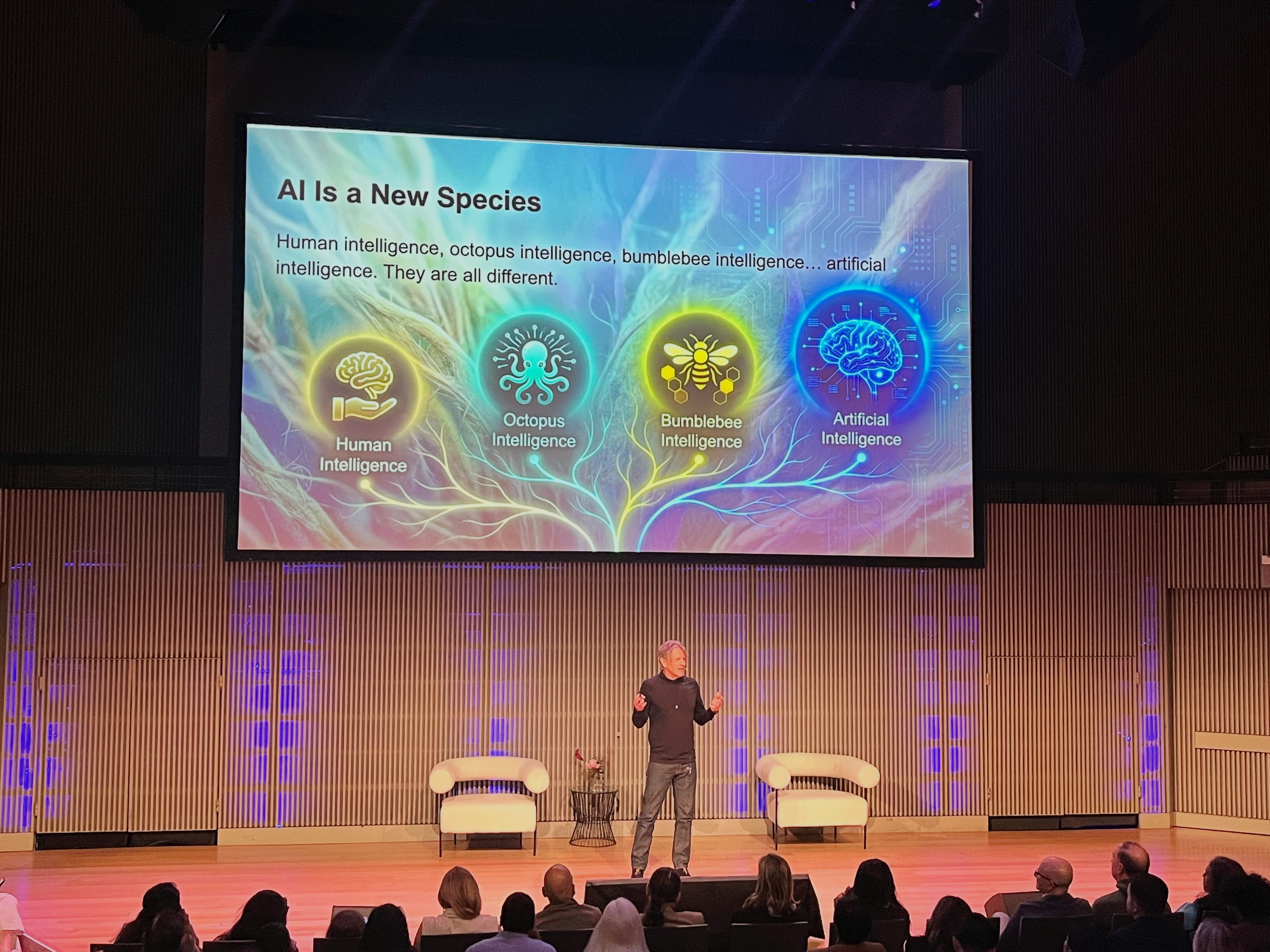
The biggest insight I had at Human Tech Week in the Bay Area happened surprisingly downstairs in a dingy basement. While polished keynotes were happening in the grand ballroom upstairs, something entirely different was emerging just below the surface.
The Human Flourishing Lab was hosting an unconference where people wrote the conversations they actually wanted to have with one another on index cards. We then posted them on the wall, voted on topics, pulled our chairs into circles, and started dialogue with one another. There were no spectators or performances, for it was simply people trying to think together and come up with solutions in real time.
I set my powerpoint deck aside and hosted my own roundtable. Within minutes, I experienced more honest dialogue and genuine connection than I ever could have felt as a ‘sage’ on the stage looking down at a sea of faces. This shift didn’t just change the vibe, but it sharpened my mission, for I left with a mycelial network of new friendships and a support system that felt alive.
The contrast was visceral, for I could feel it in my body before I could fully articulate it intellectually. Sitting in audience mode all day left me feeling flat and strangely disconnected. Sitting in circles with strangers discussing real questions made me feel energized and awake again. My nervous system was responding to the architecture itself. One room positioned me as a consumer of knowledge, while the other positioned me as a participant in collective intelligence.
I keep thinking about how outdated the conference model suddenly feels in the age of AI. The guru on stage was a transmission technology built for a world where information was scarce. That world is disappearing quickly. What feels scarce now is trust, shared meaning, and real human connection.
Gathering now needs to become more about relationship, coalition building, and coordinated action. In an age where technological change is accelerating faster than our social systems can metabolize it, we no longer have the luxury of remaining passive spectators.
A room full of some of the most brilliant minds in the world sitting silently while one person speaks is increasingly becoming an inefficient use of human presence. I found this realization deeply confronting because I was surrounded by some of the world’s top thought leaders discussing how to make the age of AI more conscious and connected, yet we were still structured inside an old operating system that strangely kept us “disconnected.”
The old operating system of leadership was built around centralized power, expertise, and audience building. It trained us to become consumers and passive participants inside systems we did not help shape.
What I experienced downstairs in that basement was not actually new. It felt ancient. It reminded me of the church basement, the recovery circles, the labor organizing meetings, the indigenous council fires, the sanghas, and the community gatherings humans have relied on throughout history during moments of transition and uncertainty.
In this moment of transition, probably one of the most meaningful panels that happened at Wisdom 2.0, was when they featured college students who spoke about the world that they were inheriting. It was one of the few moments where the conversation felt grounded in real stakes and lived experience. Real movement building requires designing gatherings around intergenerational participation from the very beginning. It requires asking harder questions about who is missing from the room and why. Conferences often gather people with proximity to influence and mistake that for transformation.
What I feel in my bones is that the role of the conference host now has to evolve from curator of speakers into steward of the community. The real work always happens between gatherings, for trust and coalitions are built slowly over time. The future belongs to gatherings that function as living ecosystems instead of isolated events.
This shift from curator to steward isn’t just a change in job title, but is a change in craft. It requires moving away from event planning and toward the rigorous work of movement weaving.
This is exactly why I created the Movement Maker Incubator. While many people feel the call to move ‘downstairs into the basement,’ few have been given the tools to facilitate that kind of collective intelligence or to sustain that energy once the folding chairs are put away. We need a training ground for those who want to turn passive audiences into active co-creators. We don’t have the luxury to be spectators any longer.
Thanks for sharing this.
Love this✨✨
So right on!!!!!